Why condition matters
Two copies of the same card can differ a lot in price. Collectors pay for how close a card is to the day it came out of the pack: sharp corners, clean edges, a scratch-free surface and a well-centred print. The rarer the card, the bigger the gap between a perfect copy and a played one.
Conditions for raw cards
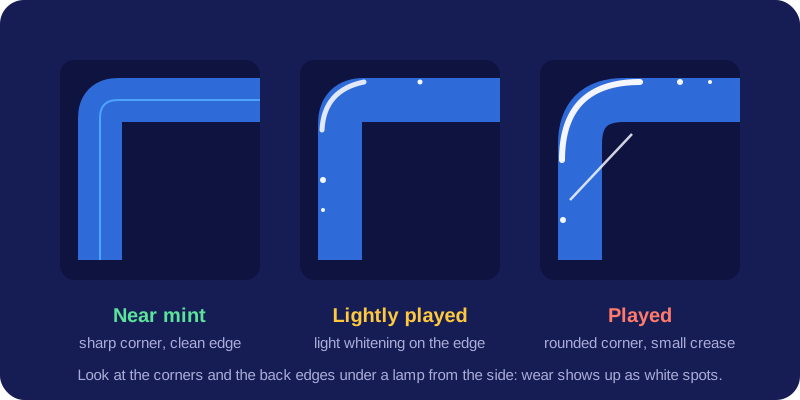
A raw card is a card that is not sealed in a grading case. We describe raw cards with three conditions:
- Near mint (NM): looks fresh from the pack. At most a tiny mark that you only see up close.
- Lightly played (LP): light wear on edges or corners, maybe a faint scratch. Still looks great in a binder.
- Played (PL): clear wear, small creases or scuffs. A budget way to complete a collection.
Every card in our shop has photos of the front and back of the exact copy you get, so you can judge for yourself. All conditions in the FAQ.
What grading is
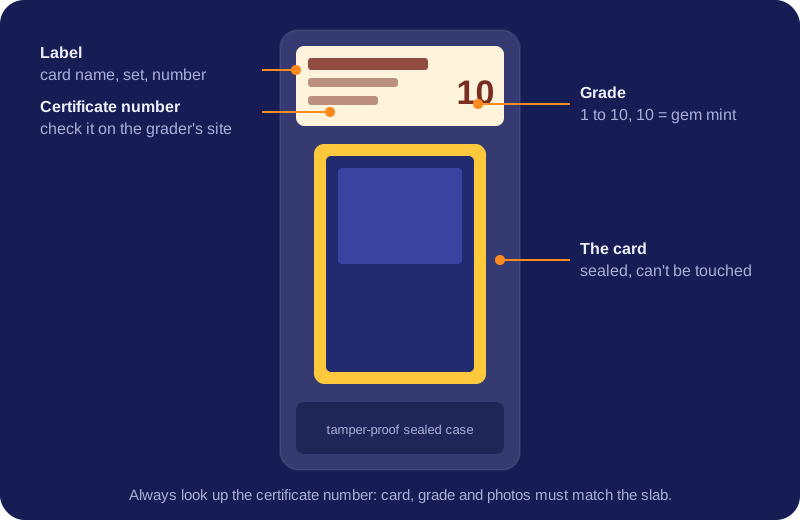
Grading means sending a card to an independent company. Experts check centring, corners, edges and surface, give it a grade from 1 to 10 and seal it in a hard plastic case (a "slab") with a label and a certificate number. The slab protects the card and makes its condition easy to trust when you buy or sell.
The grading companies
- PSA: the best known worldwide. One overall grade, PSA 10 = Gem Mint.
- BGS (Beckett): grades in half steps and also rates centring, corners, edges and surface separately. A BGS 10 Pristine is very rare; a Black Label means a perfect 10 in all four.
- CGC: strong in trading cards, half grades, clear labels.
- TAG: newer, measures cards with high-resolution scans and shows a detailed report online.
- AOG: grades on its own scale up to 10; you often see AOG slabs with Dragon Ball Super cards.
Grades from different companies are not exactly the same: a PSA 10 and a BGS 9.5 can sell for similar prices, depending on the card. When you buy a slab, always check the certificate number on the grading company's website. That is also how you spot a fake slab.
Is grading worth it?
Grading costs money (often €15 to €30 per card plus shipping and insurance) and takes weeks to months. It is usually worth it when:
- the card is valuable raw already, for example secret rares, leaders' alternate arts or promos,
- it is in excellent shape: centred, sharp corners, no whitening on the back edges, no scratches on the foil,
- a high grade (9.5 or 10) sells clearly above the raw price plus the grading costs.
For cheaper cards, keep them raw in a sleeve and toploader. They are easier to sell and nobody pays the grading fee back.
Check a card yourself
Before you grade or sell a card, look at it under a bright light, best a desk lamp from the side:
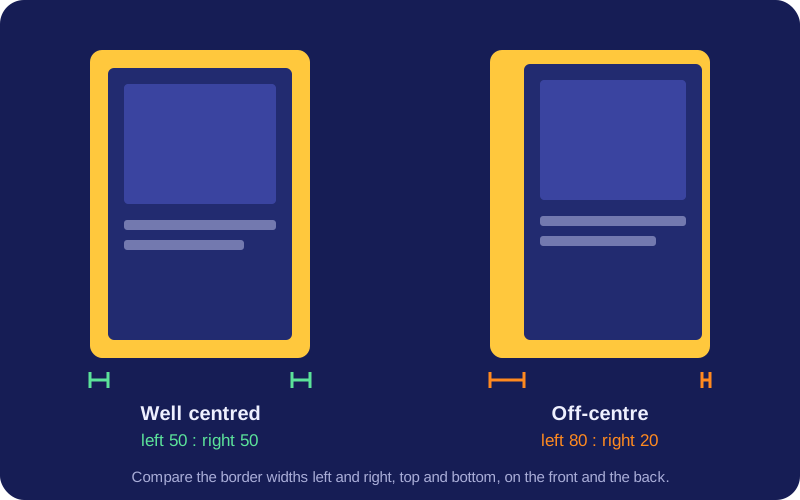
- Centring: are the borders about the same width on all sides, front and back?
- Corners: sharp, or slightly rounded or bent?
- Edges: any white spots ("whitening"), especially on the back?
- Surface: tilt the card: scratches, dents or print lines on the foil?
Handle cards by the edges, put them straight into a sleeve and a toploader, and keep them away from sunlight and moisture.
Graded slabs and hand-checked singles, with photos of the exact card.
Shop graded cards